AI vs human design: where you can safely save (and where you can't)
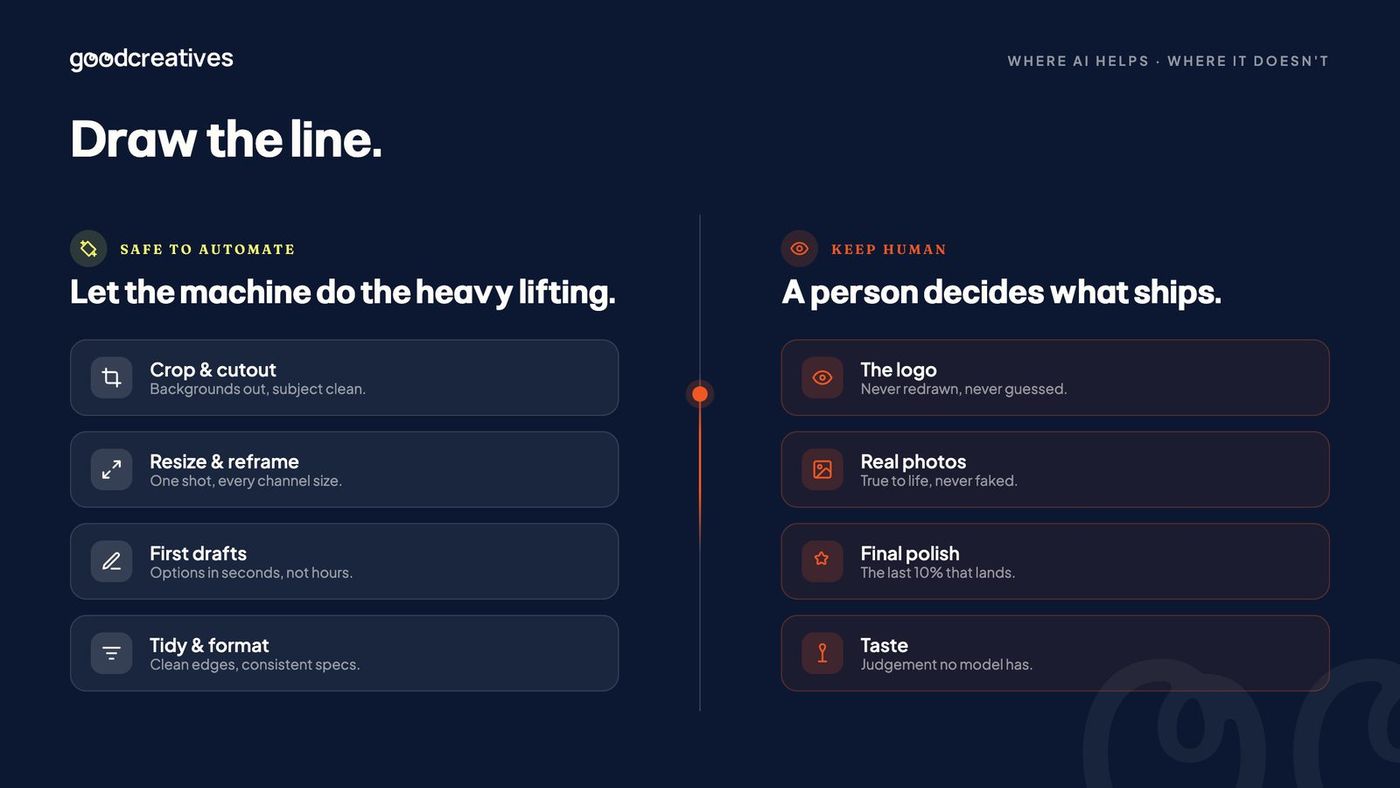
- Safe to save on: cleaning up backgrounds, resizing one design into many formats, rough first drafts you will edit, sorting and tagging your files, basic photo touch-ups.
- Do not skimp on: your logo and brand identity, anything built from real photos of your work or your team, the final ten percent of polish, and anything a customer sees that has to feel trustworthy.
- The test for any task: is this a judgement call or is it grunt work? Save on the grunt work. Pay for the judgement.
- Why it matters: design that looks fake or generic quietly costs you trust, and trust is the whole sale. What you save on the design, you lose at the point of buying.
It’s not AI vs human. It’s judgement vs labour.
The "AI or a real designer" question is the wrong frame, and it is the reason people either overspend or end up with cheap-looking work. The better frame is which parts of a job are judgement and which parts are labour.
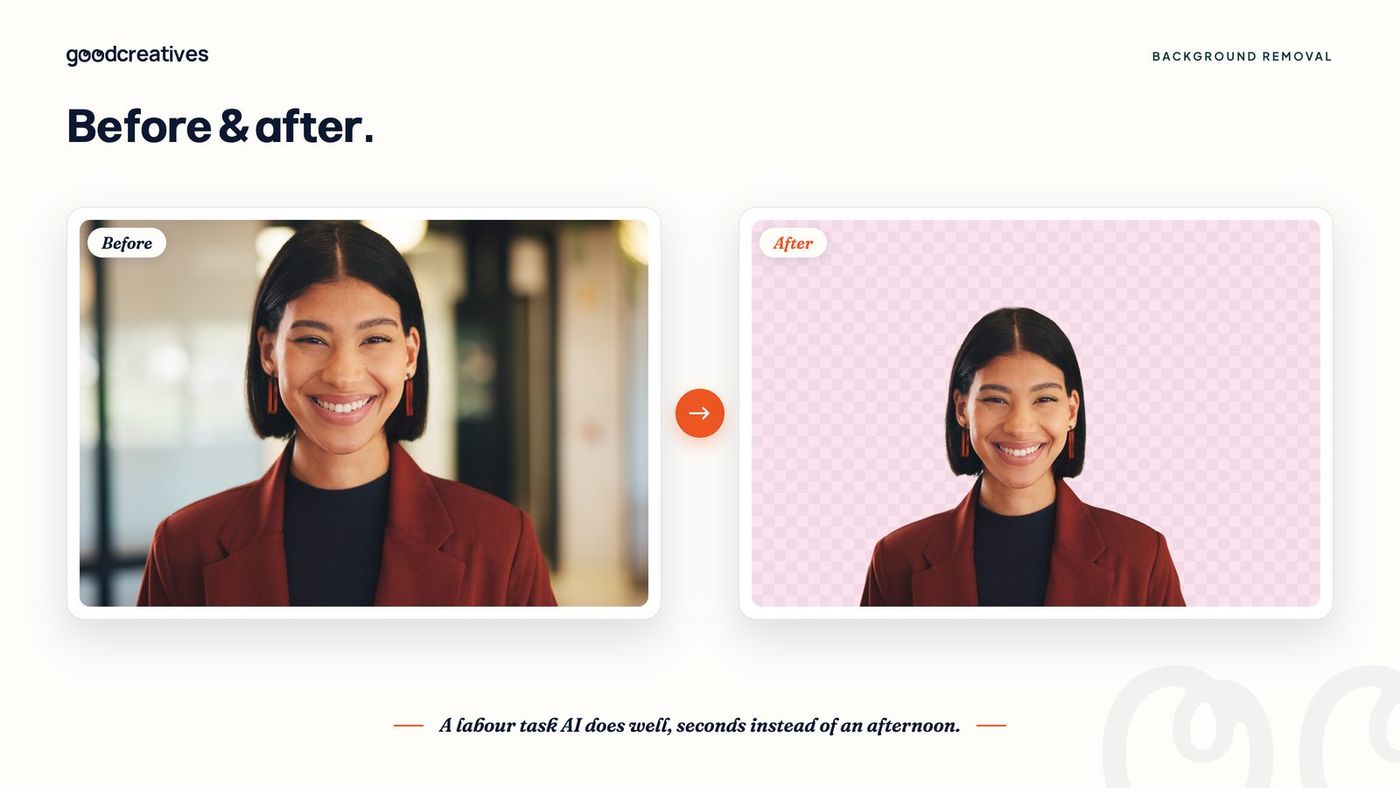
Labour is the repetitive stuff: cutting out a background, making forty sizes of one graphic, tidying a photo. A machine is genuinely good at that, and paying a person to do it by hand is a waste.
Judgement is the taste: what to make, how it should feel, whether it looks like you, whether a customer will trust it. AI is a fast assistant and a poor art director. It will give you eighty percent in seconds and then plateau, and that last twenty percent is exactly the part that separates work that looks like your business from work that looks like everyone else's.
Save on the labour. Never save on the judgement.
“AI is a fast assistant and a poor art director.”
Where AI genuinely saves you money
These are the jobs where AI is not a compromise, it is just faster. Use it freely.
- Cleaning up and cutting out. Removing a background, erasing a distraction from a photo, isolating a product. Minutes of work instead of an afternoon.
- Resizing and reformatting. Turning one design into every size you need for feed, stories, and print. This used to be pure tedium.
- Rough first drafts you will edit. A starting point for a caption, a headline, or alt text. Not the final word, but a blank page beaten into a first draft.
- Basic photo touch-ups. Fixing exposure, straightening, light colour correction on a photo you already took.
- Sorting the mess. Tagging, naming, and organising the pile of files every business ends up with.
Notice the pattern. None of these decide what your business looks like. They are the slow parts, and speeding them up is money in your pocket with no downside.
Where AI quietly costs you
These are the jobs where cheap now means expensive later. This is where a real person earns their keep.
- Your logo and brand identity. AI logo makers give you something generic, often close to what a hundred other businesses generated the same week, and the licensing is murky. Your identity is the one thing that has to be unmistakably yours. This is not the place to save forty dollars.
- Anything built from real photos of your work or your team. AI cannot invent your actual job sites, your actual staff, or the actual house you just renovated. And faked people or faked results do not just look off, they break trust the moment someone senses it. Real beats generated every time here, and it is not close.
- The final ten percent. Spacing, alignment, the size relationship between a headline and the text under it. AI gets you most of the way and stalls right where polish lives. That last stretch is what makes work look professional instead of almost-professional.
- Text inside a graphic. AI still mangles words baked into images. Anything with your name, your offer, or your phone number on it needs a human eye.
- Consistency across many pieces. Ask AI for ten posts and you get ten slightly different looks. Keeping everything recognisably one business is a judgement job.
- Knowing what to make and why. The strategy, the plan, the reason a piece exists. A machine can make a thing. It cannot decide it was the right thing to make.
“What you save on the design, you lose at the point of buying.”
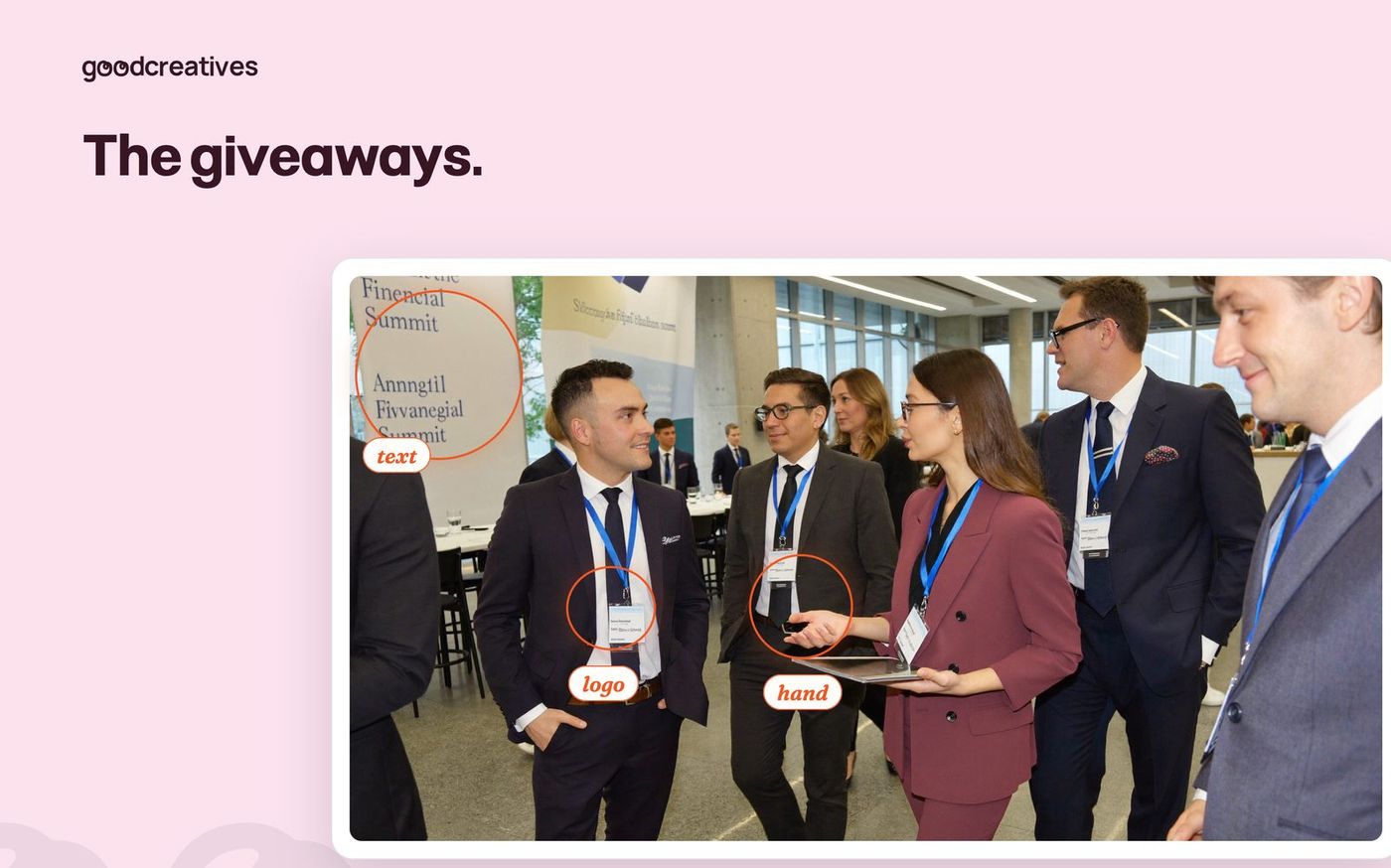
How to tell if you are leaning on AI too much
A quick gut check. If a few of these are true, you have crossed from saving into costing.
- Your posts look like everyone else's in your industry.
- Something looks slightly off and you cannot say what: a hand, a reflection, some text.
- A regular customer could not tell one of your posts from a stranger's.
- Your photos show places, products, or people that are not actually yours.
Any one of these is a small leak. Together they add up to a business that looks less trustworthy than it is, which is the most expensive problem on this list.
“A machine can make a thing. It cannot decide it was the right thing to make.”
What good actually looks like
The businesses getting this right are not choosing one or the other. They run AI hard on the slow parts and keep a person on the parts that touch the brand and the customer.
In practice that means the machine cuts the backgrounds, makes the sizes, and drafts the rough version, and a designer decides how it should feel, keeps it consistent, fixes the last ten percent, and never lets a fake photo or a generic logo near your name. You get the speed and the savings of AI without paying for them in trust.
That split is exactly how we work, on purpose. AI on the labour, real designers on the judgement. It is why the work comes back fast and still looks like a person made it, because one did.
Common questions
Is AI design just bad? No. It is a tool, and a good one for the right jobs. It is bad only when it is pointed at the parts that need judgement, like your identity or anything a customer has to trust.
Will customers actually notice? More and more, yes. People have seen enough generated images to feel when something is fake, even if they cannot name it. And the feeling it leaves, that a business is cutting corners, is the opposite of what you want at the moment someone decides to buy.
Can I just use a free logo generator or the AI button in my design app? For something throwaway, sure. For your logo and anything that represents you long term, no. Those are the exact places where generic and uncheckable licensing come back to bite.
Is AI actually cheaper? Only if you count honestly. Cheap work that has to be redone, or that quietly loses you customers, was not cheap. Save on the labour and the answer is yes. Save on the judgement and you usually pay twice.
Do you use AI? Yes, and we are open about it. We use it on the slow, repetitive parts so work comes back faster and costs less. We never use it on the parts that decide how your business looks or whether a customer trusts you. That is a person's job, and it stays that way.
The takeaway
AI is worth using. Just point it at the right work. Let it handle the labour, the cutting, resizing, drafting, and tidying, and keep a real person on the judgement, your identity, your real photos, your polish, and your consistency. Save where saving is free. Pay where paying protects the trust that actually closes the sale.
If you would rather not manage that split yourself, that is the whole idea behind what we do. Real designers on the parts that matter, AI on the parts that do not, done for you.